



An Aesthetic PA’s Guide to Aging Naturally in Your 20s, 30s and 40s
If you’ve spent any time on the Upper East Side, you’ve probably noticed something very specific about the women here: they don’t look “done,” but they also don’t look like they’re aging at the same rate as everyone else.
That’s not genetics, and it’s not luck.
It’s a very intentional, long-term approach to preventative aesthetic treatments, where the goal is not to reverse aging- but to slow it down to subtly that it never becomes obvious.
In my practice, I don’t treat aging as a single event. I treat it as a timeline; and what you do early on determines how much you’ll need later.
Aging in Your 20s: Collagen Preservation and Skin Quality
Most patients in their 20s assume they don’t need aesthetic treatments yet. But biologically, collagen production begins to decline in your mid-to-late 20s, and early sun damage often starts to surface in ways that aren’t immediately visible.
This is the decade where we focus almost entirely on skin quality and prevention, not correction.
For patients who are very expressive, I will sometimes introduce small, conservative doses of neuromodulators like Botox to prevent repetitive muscle movement from etching lines into the skin over time. This is what’s commonly referred to as preventative Botox or baby Botox, but the key here is restraint—most patients do not need full correction at this stage.
More importantly, this is when I begin incorporating light, laser treatments such as CoolPeel or Fraxel to target early pigmentation and maintain even skin tone. Devices like gentle resurfacing lasers or tone-correcting treatments help prevent the accumulation of sun damage that becomes much harder to treat later.
In select patients—especially those experiencing dehydration or dullness—I may also recommend regular facials such as ultrasonic exosome facials or regenerative treatments like PRP (platelet-rich fibrin) to improve hydration and support early collagen production.
What I actively avoid in this age group is aggressive intervention. Overuse of filler in your 20s often leads to unnatural results over time, and it’s rarely necessary when the underlying structure is still intact.
Aging in Your 30s: Volume Loss and Collagen Decline
Your 20s are where the shift becomes more noticeable- but can still be subtle.
This is when patients start to see:
- Deeper lines and wrinkles
- Early volume loss in the midface
- Changes in skin texture and brightness
At this stage, the goal is maintenance with targeted intervention.
Neuromodulators become more consistent, typically every 3-4 months, in the upper and lower face to correct lines and over-active muscles.
This is also when I begin recommending more collagen-stimulating procedures, particularly RF microneedling, which helps improve skin texture, pore size and early laxity over time.
However, one of the most underutilized treatments in this age group is laser therapy. Many patients delay lasers in favor of facials or lighter treatments, but this is often when early sun damage, even pigmentation, and vascular changes begin to appear. Addressing these with the appropriate laser- whether for pigment, redness or texture- can dramatically improve overall skin quality and delay the need for more invasive treatments later.
When it comes to filler, the approach is extremely conservative and strategic. I am not adding volume for the sake of volume. Instead, I’m restoring very subtle areas of early loss- typically in the midface or around the mouth- only when it meaningfully improves balance and structure.
Aging in Your 40s: Structural Changes and Combination Treatments
By your 40s, aging is no longer just about collagen- it’s about structure.
Patients begin to notice:
- More significant volume loss in the cheeks and temples
- Skin laxity along the jawline
- Deeper folds and shadows
At this point, single treatments are rarely enough. The most effective approach is a combination treatment plan, often referred to as treatment stacking, where we address multiple layers of aging at once.
This may include:
- Biostimulatory injectables such as Sculptra or Hyperdilute Radiesse to rebuild collagen over time
- Hyaluronic acid filler placed conservatively to restore structure and volume
- Energy-based devices like Virtue RF microneedling or Sofwave for skin tightening
- More advanced laser resurfacing with Helix and CO2 for texture and fine lines
One of the biggest misconceptions I see is patients trying to “catch up” in their 40s after doing very little previously. While we can absolutely achieve beautiful results, it often requires more intervention than if we had started earlier with a preventative approach.
Why Preventive Aesthetic Treatments Work
The patients who age the most naturally are not doing more- they’re doing the right things, consistently, at the right time.
They are:
- Maintaining skin quality with lasers and regenerative treatments
- Using neuromodulators strategically
- Avoiding overcorrection
- Following a long-term plan tailored to their face
The goal is never to look different. It’s to look like yourself- consistently.
Creating a Personalized Preventive Plan
No two patients age the same way, which is why a standardized approach doesn’t work.
In my practice, every patient receives a customized aesthetic treatment plan based on their facial anatomy, skin quality, lifestyle, and long-term goals. This allows us to be proactive rather than reactive- and to achieve results that are subtle, refined, and undetectable over time.
Refined, Personalized Aesthetic Care
At HausMD, aesthetic treatments are approached with precision and restraint. We focus on long-term results that enhance your natural features without ever looking overdone.
Each patient is evaluated individually, with treatment plans designed to evolve over time as your face and skin change. If you’re looking for a more thoughtful, personalized approach to injectables, lasers, and skin treatments, we invite you to schedule a consultation.
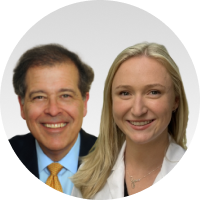
Dr. Kenneth Rothaus, a board-certified Manhattan and Westchester plastic surgeon, and Courtney Brown, a board-certified physician assistant, bring extensive surgical training from Yale, Harvard, Weill Cornell, and New York-Presbyterian. Together, they provide comprehensive aesthetic care from surgical procedures to injectables, lasers, and skin treatments, tailoring custom treatment plans to deliver natural, refined results and an exceptional patient experience.
Ready To Get Started?
If you would like to learn more about our offered treatments, products, or would like to schedule a consultation appointment, please contact our office today. Our friendly team will be happy to assist you.
BOOK NOW GALLERY
 REVIEWS
 CALL
CALL CONTACT