


Aesthetic medicine is changing. While Botox, filler, and lasers are still incredibly useful, there is growing interest in treatments that focus on something different: the biology of how our skin repairs, communicates, and regenerates.
Secretome therapy is one of the most exciting developments in this area of regenerative aesthetics.
At HausMD on the Upper East Side, we use the Acorn system to create a personalized secretome derived from your own cells. The goal isn’t to add volume or change the shape of your face. Instead, secretome therapy is designed around the cellular signals involved in tissue repair, collagen production, and regeneration.
And while you may hear secretome discussed alongside exosomes, they are not the same thing.
What Exactly Is the Secretome?
Your cells are constantly communicating with one another. They do this by releasing different biological signals into the surrounding tissue.
The complete collection of substances a cell releases is called its secretome.
The secretome can include growth factors, cytokines, peptides, proteins, and extracellular vesicles, including exosomes. Together, these signals play roles in processes such as tissue repair, inflammation, collagen production, and cellular communication.
An easy way to think about it is this: if a cell is a communication center, the secretome is the collection of messages it sends out.
That is what makes secretome so interesting in regenerative medicine. Rather than simply treating something we see on the surface of the skin, we’re looking at the biological communication involved in how tissue responds and repairs itself.
Secretome and Exosomes are Different
This is an important distinction because the two terms are often grouped together.
Exosomes are one component that can be found within the secretome. The secretome is the broader collection of substances released by cells.
Exosome-based treatments focus specifically on extracellular vesicles and the signals they carry. Secretome therapy works with a more comprehensive collection of cell-derived signals.
So I don’t think of secretome as a newer or “better” version of exosomes. They are distinct regenerative approaches with different biological compositions.
Patients specifically interested in exosome treatments can learn more about the Exosome Facial at HausMD.
What Makes Our Secretome Therapy Different?
At HausMD, we use the Acorn system, which allows us to create a personalized secretome derived from your own cells.
And it starts with a few hair follicles.
A small follicle sample is collected and sent to Acorn’s laboratory, where cells are isolated, cultured, and banked. Those cells can then serve as the source for your personalized secretome.
This means we’re not simply applying the same off-the-shelf regenerative product to every patient. Your secretome originates from your own cellular material.
Your cells are also banked, which allows your secretome to potentially be incorporated into future treatments rather than limiting its use to a single appointment.
For patients interested in regenerative medicine and longevity, this personalized aspect is one of the things that makes the technology particularly compelling.
Who Tends to Be Interested
Secretome therapy tends to appeal to patients who care about skin quality and hair restoration. That includes people noticing early to moderate changes in texture, tone, or firmness, patients addressing aging skin, fine lines, and loss of hair, also those who want to support healing after a laser or microneedling series. Whether it belongs in your plan, where it sits in the sequence, and how often you would receive it are all decided at consultation.
Before You Bank Your Cells: Questions Patients Ask
How is secretome therapy different from PRP?
Both start with your own biology, but from different sources. PRP, or platelet-rich plasma, concentrates growth factors from a same-day blood draw. The secretome used at HausMD is created from stem cells isolated from your hair follicles and expanded in a laboratory, so it carries a broader mix of signaling molecules. Your provider can explain which approach, or which combination, suits your goals.
What does secretome therapy cost?
Pricing depends on how the treatment is built into your overall regenerative plan: the treatment area, any combination procedures, and the creation and banking of your personalized secretome through the Acorn system. HausMD reviews your goals at consultation and provides a customized pricing plan before treatment begins.
How many sessions will I need?
There is no fixed number. Some patients follow a series spaced over several weeks, while others add secretome therapy periodically as part of ongoing maintenance or recovery after other treatments. Your provider will build a schedule around your skin and the rest of your plan.
Does secretome therapy replace my exosome or laser treatments?
Usually not. At HausMD it is most often layered onto treatments you may already be receiving, such as microneedling, lasers, or radiofrequency, rather than swapped in for them. Your provider will look at your current routine and suggest where a personalized secretome adds the most.
Is there downtime?
Downtime usually depends more on the treatment secretome therapy is paired with than on the secretome itself. Mild redness or sensitivity is possible and typically settles quickly. Your provider will give you aftercare guidance specific to your combined plan.
A Plastic Surgeon’s Read on Regenerative Treatments
Plenty of med spas offer regenerative treatments from a menu. HausMD was founded by Dr. Kenneth Rothaus, a board-certified plastic surgeon in Manhattan and Westchester, and the practice’s plastic surgery roots shape how every option is evaluated. Dr. Rothaus and Courtney Brown, a board-certified physician assistant, bring surgical training from Yale, Harvard, Weill Cornell, and New York-Presbyterian, and they plan secretome therapy the way they plan any procedure: against your anatomy, your skin quality, and what else is on your calendar.
That perspective matters most when you are choosing between options. A team that works across surgical and non-surgical care can tell you when a regenerative treatment is the right tool, when a laser or device will do more, and how to sequence the two. For a wider look at the philosophy, see HausMD’s overview of regenerative medicine on the Upper East Side, or read what patients say about their care.
Start With a Skin-Quality Consultation
If you are curious whether a secretome built from your own cells belongs in your plan, the first step is a consultation with the HausMD team on the Upper East Side, including a full facial analysis and a conversation about your goals. Request a consultation online, or call the practice to talk through timing, pricing, and how the Acorn process works.
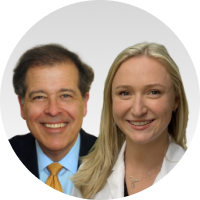
Dr. Kenneth Rothaus, a board-certified Manhattan and Westchester plastic surgeon, and Courtney Brown, a board-certified physician assistant, bring extensive surgical training from Yale, Harvard, Weill Cornell, and New York-Presbyterian. Together, they provide comprehensive aesthetic care from surgical procedures to injectables, lasers, and skin treatments, tailoring custom treatment plans to deliver natural, refined results and an exceptional patient experience.
Ready To Get Started?
If you would like to learn more about our offered treatments, products, or would like to schedule a consultation appointment, please contact our office today. Our friendly team will be happy to assist you.
BOOK NOW GALLERY
 REVIEWS
 CALL
 CONTACT